

Hi, I'm Shane
Sometimes you know something needs to change.
You may not know exactly what. You may simply know that you cannot keep living in the same way.
Perhaps you feel stuck. You have lost confidence in yourself. You are tired of repeating the same patterns, putting off important decisions, or wondering why life does not feel as fulfilling as you hoped it would.
At that point, it can be hard to know where to turn.
Should you speak to a therapist? A counsellor? A coach? Your GP? More than one person?
This guide cannot answer that for you. But it can help you think more clearly about what kind of support may be right for you now.
Therapy, counselling, and coaching are not in competition
Therapy, counselling, and coaching are different forms of support. They have different purposes, boundaries, training, and ways of working. But they are not opposites.
All can involve being listened to, understanding yourself better, thinking about relationships and patterns, and making changes in your life.
It is not helpful to say that therapy is only about the past and coaching is only about the future. Life is more complicated than that.
The better question is: What kind of support would be most helpful for me right now?
Sometimes that may be therapy or counselling. Sometimes it may be coaching. Sometimes it may be medical or specialist support. At different points in life, more than one kind of support can be helpful.
Coaching often starts with what is not working
You do not need to know exactly what you want before coaching can begin. Many people start with a clearer sense of what they do not want. They do not want to keep feeling stuck, overwhelmed, disconnected, uncertain, or trapped in patterns that no longer help them.
That is enough to begin.
Coaching gives you space to understand what is happening, what is no longer working, and what you would rather move towards.
You may begin with one honest question: What is no longer working for me—and what might become possible if it changed?
The answer may emerge gradually. You may want more confidence, better boundaries, a healthier relationship, a clearer direction, more energy, or a more fulfilling life that feels more like your own.
A good coach does not tell you what that answer should be. They help you find a direction that is genuinely yours.
The two journeys in coaching
I think of coaching as involving two journeys.
The first is the horizontal journey: the practical route from where you are now to where you want to be.
This may involve getting clear on a goal, making a plan, breaking a bigger change into smaller steps, having important conversations, trying new habits, and staying accountable to what matters.
But most people do not struggle because they cannot make a plan. They struggle because the plan asks something of them.
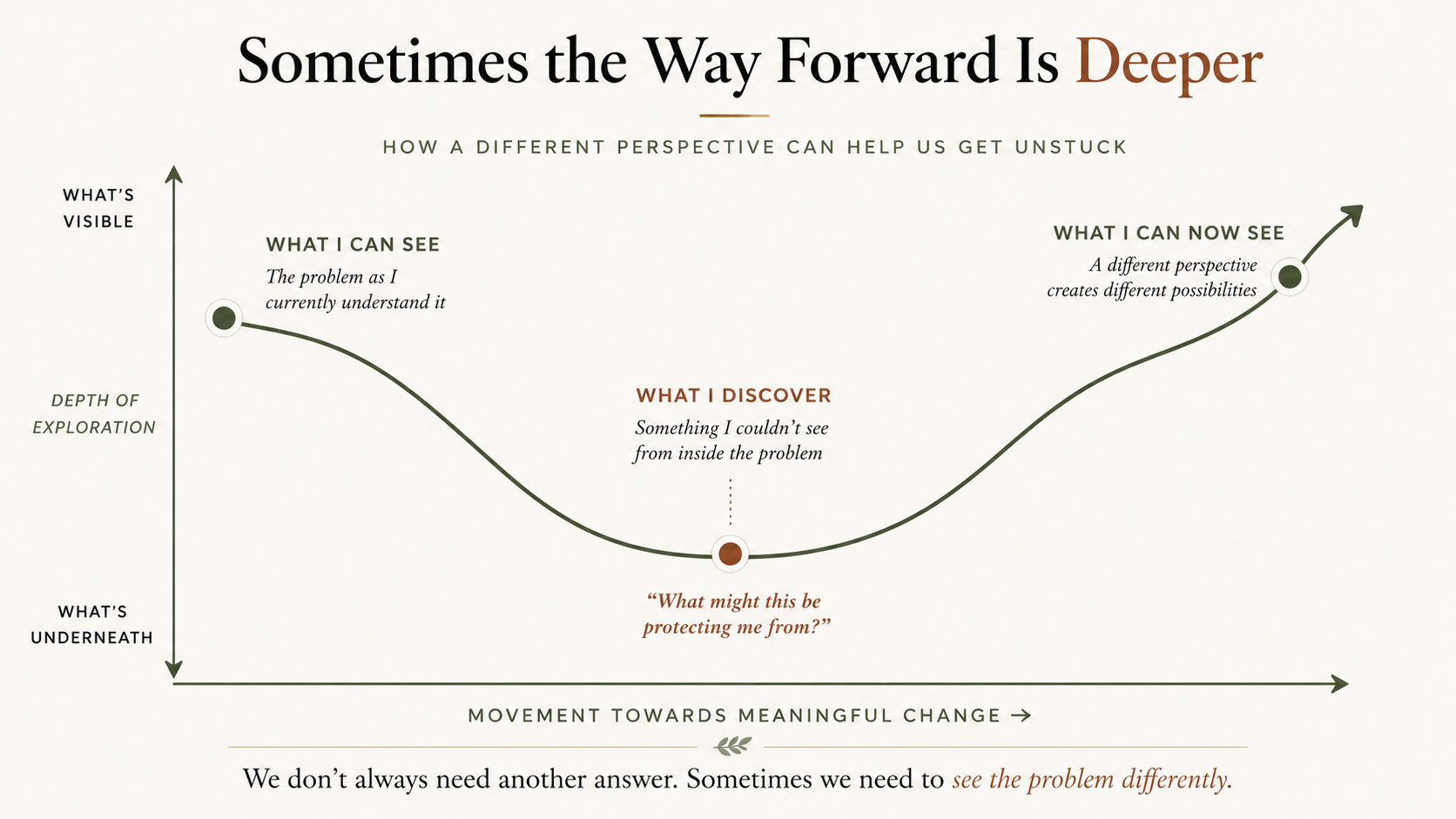
That is where the vertical journey begins.
The vertical journey is what happens inside you as you try to move forward. You may meet fear, uncertainty, and doubt. Old habits may return. You may need to say no, speak up, tolerate discomfort, or stop waiting for everyone else to approve your choices.
You may need to build confidence in yourself, practise new skills, set stronger boundaries, and let go of ways of protecting yourself that are no longer helping.
The horizontal journey is about what you do. The vertical journey is about who you become while you do it.
Good coaching supports both.
What coaching can offer
Coaching is a partnership. You are the expert in your own life. A coach does not have all the answers for you. Their role is to help you think more clearly, see new possibilities, make choices, and take action.
Coaching can help you get clear about what you want; make decisions with more confidence; understand what is keeping you stuck; build on your strengths; set healthier boundaries; communicate more honestly; navigate a difficult situation or life change; turn insight into action; keep promises to yourself; and build deeper trust in your own judgement.
A coach is not there to tell you how to live. But they are not there to leave you alone with a hard problem either.
The coaching relationship is an alliance: a place to think, learn, test new ideas, regroup when things do not go to plan, and keep moving towards what matters to you.
What coaching cannot offer
Coaching is not therapy, medical care, diagnosis, or crisis support.
A coach cannot diagnose or treat a mental-health condition. Coaching cannot replace the support of a GP, psychologist, psychiatrist, accredited counsellor, psychotherapist, or another appropriately qualified professional when that support is needed.
Coaching should not promise healing, recovery, or a guaranteed result.
Meaningful change is possible. But the direction, pace, and outcome of the work are shaped by you, your circumstances, and the partnership you create with your coach.
When coaching may be a good fit
For many people, coaching can be an excellent place to begin. It may be a good fit if you feel safe and stable enough to work on a goal, a change, or a direction in your life.
You may be ready for coaching if you are thinking: I know something needs to change, but I cannot see the way forward; I want to trust myself more; I keep putting off a decision or conversation that matters; I am tired of repeating the same patterns; I am facing a big change and want to handle it differently; or I understand a lot about myself, but I need help turning that into action.
Some people come to coaching after previous therapeutic support. They may already have useful insight and self-awareness. Coaching can help turn that understanding into everyday choices, boundaries, habits, conversations, and actions.
That does not make coaching better than therapy. Different kinds of support can be useful at different times.
When coaching may not be enough on its own
You do not need to diagnose yourself before asking for help.
Another form of support may be a better place to begin if you are looking for diagnosis, treatment, trauma-focused work, specialist care, or help with serious distress or difficulty coping day to day.
If you feel unsafe, are in crisis, or are at risk of harming yourself or someone else, seek urgent help through emergency services, your GP, or an appropriate crisis service.
A good coaching relationship is not about keeping you in coaching at all costs. It is about partnering with you to find—and do—what is genuinely best for you.
If it becomes clear that coaching alone is not enough, a coach can remain your ally in deciding what to do next. That may mean pausing coaching, ending the agreement, or helping you take practical steps towards finding an appropriately qualified professional.
Choosing someone you can trust
Choosing a coach, therapist, counsellor, or another practitioner is personal. You are not simply choosing a service. You are choosing someone with whom you may share parts of your life that matter deeply.
Trust matters.
Look for clear qualifications, relevant experience, confidentiality, honest boundaries, and a willingness to say when the work is not the right fit. Look for testimonials where available. Ask what happens if your needs change, how progress will be reviewed, and whether the person will refer you elsewhere if another kind of support would help more.
Credentials and experience matter. So does how you feel in the conversation.
Do you feel listened to? Respected? Can you imagine being honest when things are difficult? Does the person seem interested in understanding your situation, rather than fitting you into a pre-prepared solution?
Trust should not be given blindly. It is built through clarity, integrity, and the quality of the relationship.
A conversation for clarity
Many reputable coaches and therapists offer complimentary introductory calls. These give you a chance to talk through your situation, ask questions, and get a sense of whether the person and their approach are a good fit.
You do not need to commit to anything simply because you have a conversation. The purpose is clarity.
Shane Pearson is an ICF Professional Certified Coach (PCC) who offers tailored online life coaching across Ireland. His approach is collaborative, practical, and centred on helping clients gain clarity, build deeper confidence in themselves, and take meaningful action through difficult situations or life changes.
If you are looking for a non-clinical coaching partnership to help you move towards a meaningful goal or a more fulfilling way of living, a discovery call can help you explore whether Shane’s approach is right for you.
This article is for general educational purposes and is not medical, psychological, counselling, or psychotherapeutic advice. Before publication, have the therapy and counselling comparison reviewed by an appropriately accredited Irish practitioner.